Splash-proof or leak-proof: what each lid really does
Three words, three different promises, and one of them is the difference between a damp desk and a ruined bag. Here is what each one means, how to test the lid you already own, and which pieces from the Ideus range sit where.
By Marta Iken · published 24 August 2026 · updated 24 August 2026
There is a particular kind of disappointment that arrives about four days after a tumbler does. The cup is lovely, the coffee is hot, the colour was the right choice, and then it goes into a bag on its side for a fifteen-minute walk and comes out having quietly emptied itself into the lining. Nobody was lied to, exactly. The word on the box was splash-proof, and splash-proof does not mean what most people assume it means.
This guide is about the gap between three words that get used as if they were synonyms. They are not, and the distance between them is bigger than the distance between two brands.
- Leak-proof14 of 17
- Splash-proof3 of 17
The three words, in plain terms
Splash-proof means the lid keeps the drink inside while the vessel is upright. Someone walks past your desk, the mug rocks, the coffee moves and stays put. That is the whole promise. Tip the vessel and the promise ends, usually immediately.
Spill-resistant is a step up and a vaguer one. It usually means a gasket seals the lid against the rim, so a knock buys you a second to catch it and a brief tilt does not empty the cup. It rarely means you can lay it down. Nobody who says spill-resistant is inviting you to put it in a bag, and if they meant that, they would use the third word.
Leak-proof is the only one that means what everybody hopes all three mean: closed, on its side, in a rucksack, for a walk, and nothing comes out. It is a strong claim and a testable one, and careful makers reserve it while careless ones do not.


Why the sliding cover is the classic trap
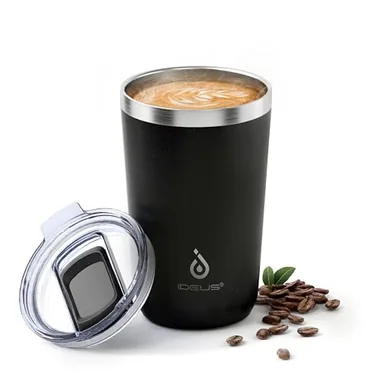
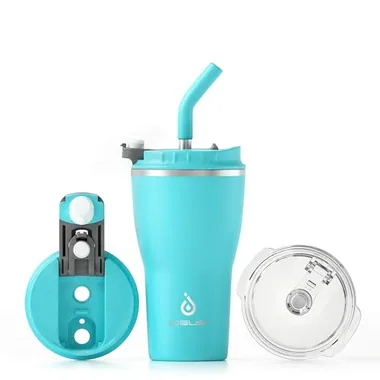
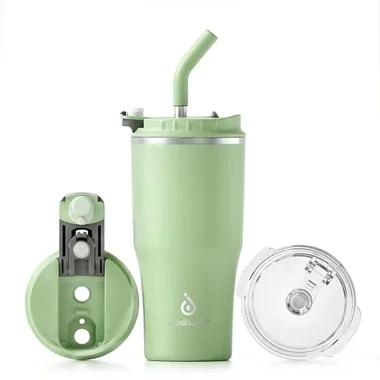
The most common lid in this whole category, not just at Ideus, is a press-in lid with a small hatch that slides across the drinking hole. It feels definitive. The hatch clicks shut, the hole disappears, the mug looks sealed.
It is not sealed, and understanding why takes ten seconds. The hatch closes the hole in the lid. It does nothing about the join between the lid and the rim of the cup, which is a press fit with a silicone ring, held in place by friction. Lay the mug on its side and the liquid does not go looking for the drinking hole. It presses against the whole circumference of that ring, and a press fit is not a seal against pressure.
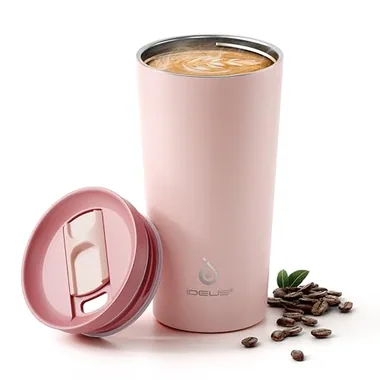
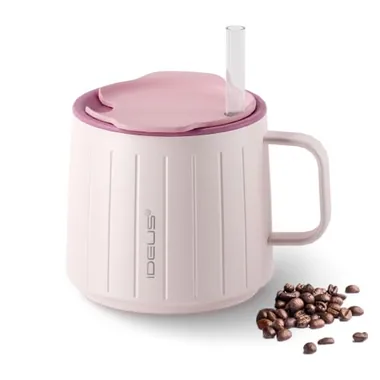
The Ideus team is unusually straight about this. Our description for its 16 oz mug describes the press-in lid, the silicone gasket, the splash-proof sliding cover, and then says, in the same paragraph, that it is not leak-proof. That sentence costs the brand the word most buyers search for, on the piece that sells the most, and it is the reason this site organises itself around lids rather than around colours.
The test that settles it in twelve minutes
You do not need to take anyone's word for this, including ours. Fill the vessel with cold water, cold, so that a failure does not scald you, close the lid the way you normally would, and run two tests in order.
- Upright test: stand it on a dry tea towel for ten minutes. Any dampness at all means the lid is not seated, the gasket is out of its channel, or the ring has hardened. That is a fault, and it is usually fixable.
- Side test: lay it on its side on the towel, over a sink, for two minutes. Seepage here is not a fault on a splash-proof lid. It is the lid doing exactly what its description says it does.
The distinction matters because the second result gets returned as a defect every day of the week, and it is not one. If you need the side test to pass, you need a different lid, not a replacement of the same lid.
Where the Ideus range actually sits
The split in this range runs along a line that is worth knowing before you fall in love with a colour.
| Lid type | Where it lives | The maker's verdict | Bag? |
|---|---|---|---|
| Pour spout | 50 oz thermal carafe and similar | Not stated | Not claimed |
| Lid | 24/34 oz insulated beer stein and similar | Not stated | Not claimed |
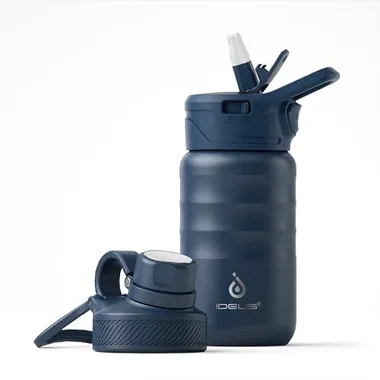
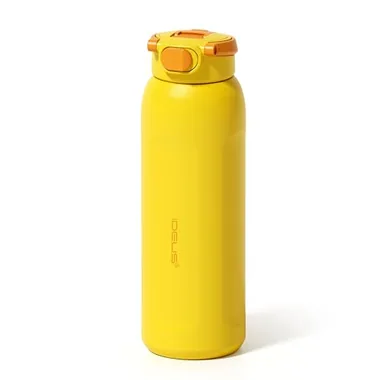
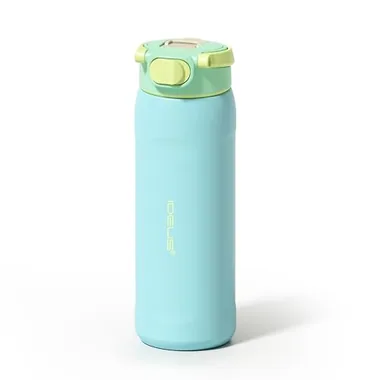
| Straw | 12 oz insulated bottle with a straw and similar | Leak-proof | The maker says yes |
| Lid | 14 oz insulated bottle and similar | Leak-proof | The maker says yes |
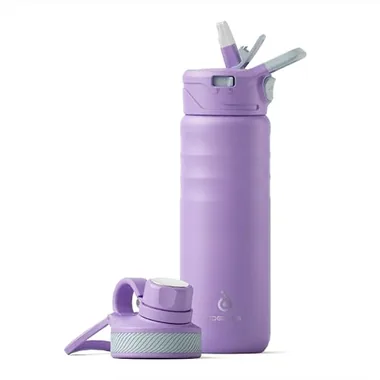
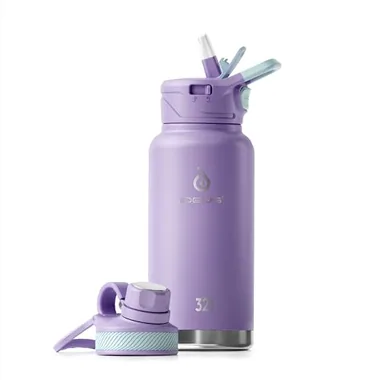
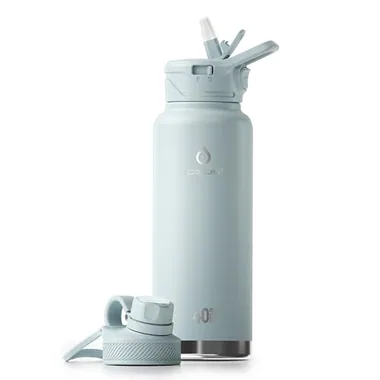
| Pour spout | 24 oz insulated bottle and two lids and similar | Leak-proof | The maker says yes |
| Straw | 14 oz tumbler with a handle and straw and similar | Not stated | Not claimed |
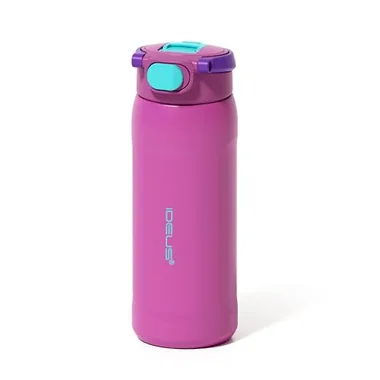
| Sliding | 20 oz tumbler with a straw and similar | Splash-proof | No, upright only |
Read that table once and the buying decision changes shape. The pieces with the widest colour choice, the mugs and the sliding-lid tumblers, are upright-only pieces. The pieces whose descriptions say leak-proof are the straw tumblers and the bottles. There is no piece in this range that gives you both the biggest colour range and the strongest lid claim, and anybody who tells you otherwise is selling.
What makes a leak-proof lid stop being leak-proof
A seal is a rubber ring under compression. Three things end that, and all three are recoverable if you catch them.
The first is a gasket that went back in twisted. Rings come out for washing, that is a feature, and they go back in by feel. A ring seated proud on one side looks fine and holds nothing. Run a fingernail all the way round the channel after refitting. You are feeling for a step.
The second is a thread that never went home. On bottle lids the common complaint is that the cap is hard to close, and it is almost never a manufacturing fault. It is a thread caught at an angle on the first turn. Back it off completely, stand the bottle upright, and start again with light pressure until it takes. Then it turns freely to the stop.
The third is age. Silicone absorbs oils and gradually loses its spring, and a ring that has held espresso twice a day for two years is a consumable that has been consumed. There is no restoring it, and no amount of bicarbonate brings the compression back.
Why makers use three words instead of one
It would be simpler for everybody if the industry had one word and one test. It does not, and the reason is not conspiracy but physics: there is no single failure a lid either passes or fails. A lid can hold against a slosh and fail against pressure. It can hold cold water and weep hot coffee, because heat softens silicone and expands the air trapped above the liquid. It can hold on day one and fail in month six, when the ring has taken a set.
Manufacturers respond to that by claiming the narrowest thing they can defend. A splash-proof claim is nearly unfalsifiable, so it is cheap to make. A leak-proof claim invites a photograph of a wet bag in a review, so it costs something to make and means more when it appears. Read the words that way and the category becomes much easier to shop: the strength of the claim tells you what the maker is willing to be held to.
There is a second reason worth knowing. It explains the sliding lid specifically. A truly sealed vessel of hot liquid builds pressure as it cools and then as it warms in a car. Sealed lids handle this with a vent or a thread that yields.
A press-in lid cannot, and a press-in lid that genuinely sealed would eventually pop off in a bag on a warm day. The splash-proof press-in lid is not a cheaper version of a leak-proof one. It is a different answer to a different problem, and for a desk it is the better answer.
What the words mean for six ordinary situations
| What you are doing | Splash-proof lid | Leak-proof lid |
|---|---|---|
| Sitting on a desk, lid closed | Fine. This is what it is for. | Fine. |
| Car cup holder, lid closed, city driving | Fine. Slosh is what the hatch stops. | Fine. |
| Carried in a hand, upright, on a walk | Fine. | Fine. |
| Laid on its side in a bag | No. Expect a wet bag. | The maker says yes. |
| Upside down in a rucksack for an hour | No. | Usually, if the ring is seated and the thread is home. |
| Filled with something fizzy and closed | Vents, so nothing dramatic happens. | Do not. A sealed vessel and carbonation is a pressure problem. |
The row that surprises people is the last one. A better lid is worse for a fizzy drink, because better here means sealed, and a sealed vessel of carbonated liquid is a small pressure vessel that gets opened over somebody's lap.
Reading a product page without being misled
Four habits sort the honest descriptions from the loose ones, and they work on any brand.
- Read the whole bullet, not the heading. A heading can say leak-proof while the sentence under it says the lid keeps drinks contained. Those are not the same claim, and the sentence is the one written by somebody who had to be careful.
- Look for the negative. A maker who writes down what a lid does not do has thought about the question. Ideus writes it in the mug product page, and that sentence is worth more than three adjectives.
- Check whether the claim is attached to a lid or to the product. Pieces that ship with two lids often claim leak-proof for one of them, and the claim quietly attaches to the piece in the reader's head.
- Distrust a leak-proof claim on a press-in lid with an open drinking hole and a slider. That combination cannot seal, and a product page that says it does is describing something the object does not do.
Reviews are the second source, and the useful ones are specific. A review that says it leaked tells you very little. A review that says it leaked in a bag on its side tells you the lid is not leak-proof. A review that says it leaked standing on a desk tells you the gasket was faulty or missing, which is a different complaint with a different fix.
The gasket, in more detail than most people want
Every claim on this page rests on a ring of silicone under compression. Understanding three things about it removes most of the mystery.
It works by being squeezed. A gasket that sits in its channel unsquashed does nothing. The seal happens when the lid closes and the ring deforms into the gap. That is why a lid that closes easily is often a lid that is not sealing, and why a slightly stiff close on a new bottle is a good sign rather than a defect.
It takes a set. Silicone under long compression slowly stops springing back, faster if it is repeatedly heated. A ring that lives permanently squashed in a closed lid ages faster than one that gets a night off, which is a small argument for storing these things with the lid resting rather than screwed down.
It hates being twisted. A ring that goes back into its channel with a half turn of twist sits proud in one place and low in another, and no amount of tightening fixes that geometry. It looks fine. It leaks in exactly one orientation, and that is why the fault seems intermittent and maddening.
How to read the verdict on each product page
Every product page here carries one of four verdicts, and each verdict is a sentence from the maker rather than a judgement of ours. Leak-proof means our description says so. Splash-proof means our description says that, and on this range it usually says the second half too. Spill-resistant means a gasket claim with no bag claim. Not stated means our description is silent, and the honest response to silence is silence with advice: carry it upright.
If the drink is going in a bag, only the leak-proof verdict is the one to lean on.
The one-sentence version
If it must travel lying down, buy a piece whose product page uses the words leak-proof, and check the ring every few weeks. If it lives on a desk or in a cup holder, a splash-proof lid is not a compromise, it is the right tool, it comes in far more colours, and it will not disappoint you as long as nobody promised you a bag.